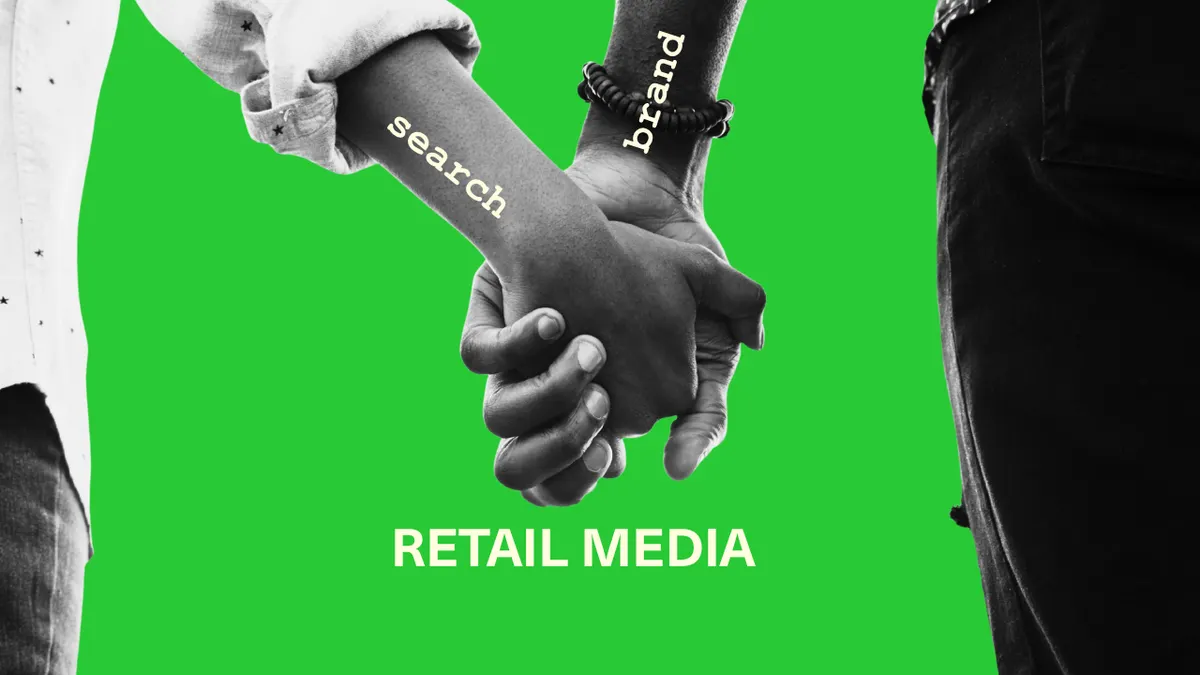
Brand to Agency: Our objective is to build awareness AND drive sales.
Agency to Brand: Suuuuuuure.... but which one do you actually want?
If you've spent any time in agency-land, you've heard that brief a thousand times. It sounds like a strategy, but it's really just a cop-out. Awareness and sales — sure, mate, that's why we all have jobs. But how much of each? Which one wins when they inevitably resist each other?
Eighteen months ago, I wrote a piece asking something that felt slightly heretical at the time: is retail media part of search, or is search part of retail media? On Sunday, Vinny Rinaldi — VP, Consumer Connections at Hershey — published an essay that took off across my feed. Reading it, I realized he'd answered a key question that I posed back then. So I went back and reread my own piece.
What I got right — and what I missed
My argument back then was that our channel labels had stopped making sense. Retail media is CTV, AND its digital video AND it's search. We were measuring it as a separate line on the chart while the formats inside it were identical to the ones we'd been buying for years.
I ran a LinkedIn poll at the time. 73% of respondents said traditional digital channels were subsets within retail media; 18% said it depends who's asking (CFO or CMO); only 9% saw it the other way around. (Keep in mind that my audience on LinkedIn is largely folks working in retail media.)
But the question that really matters was where the budget came from, and how you measured it. Jon Flugstad, now CBO at MetaRouter, put it better than I did in my own comments: treating retail media like a channel misses the point. It's a way of buying media, where the gravitational pull is the connection to the audience and the transaction.
So I had the diagnosis. What I didn't have was the why. I could see that retail media was funded oddly and measured oddly. But Vinny's piece articulates why that approach has been so persistent, even when recognized as less than ideal.
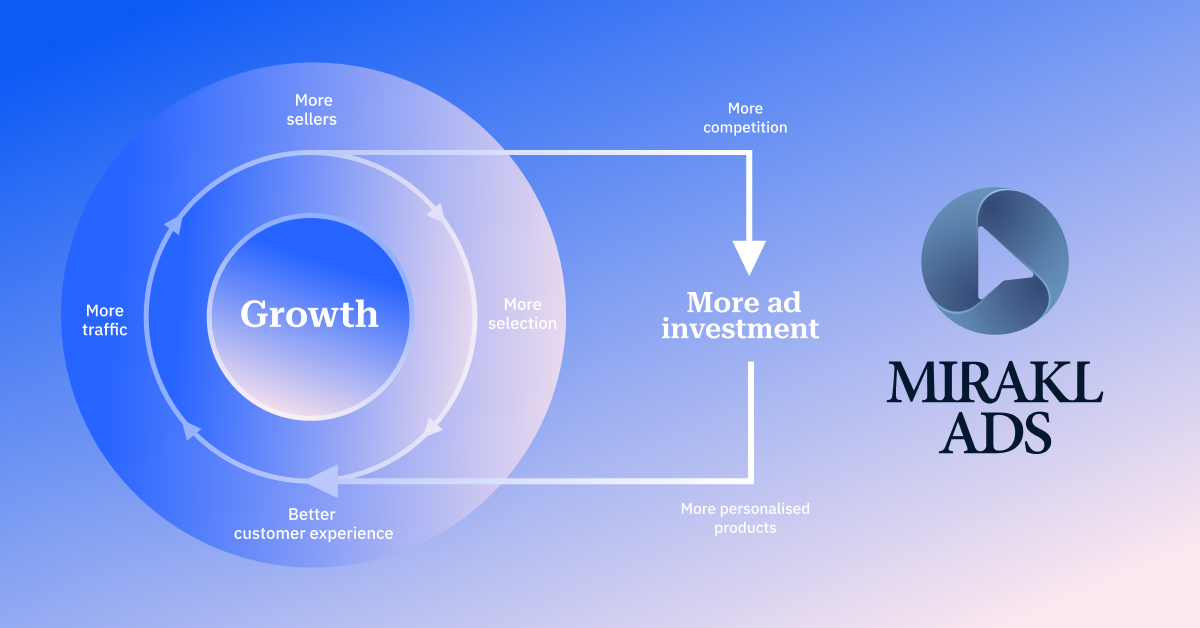
Mirakl Ads is the only retail media solution designed for both 1P & 3P marketplace brands. Why does that matter?
Marketplace sellers demand a seamless advertiser experience that still offers full-funnel ad formats. And retailers need a flexible solution that allows you to scale your media business.
Same Job Description, Different Invoice
Vinny says that retail media didn't just get funded oddly. It inherited an entire job description from the budget it came out of. "Same job description," Vinny wrote, "but a different invoice."
When the money comes from search, retail media inherits search's brief, search's metrics, and search's ceiling. You're optimizing against intent that already exists — capturing demand, not creating it. That's a real job. It's just not the only job that retail media could be doing.
Demand creation and demand capture aren't two budgets, he argues. They're one system. I'd been asking where retail media sits. But the better question is what it's for. Give it a real brief, Vinny says, and the funding follows.
This reminded me of a comment I heard at POSSIBLE this year. On an ADWEEK panel, Lauren Weinberg, CMO of Supergoop, said: "I don't want to see 'retail media' as a line item on my campaign plan." That's not a complaint about retail media being on the plan — it's that it gets plopped in there as one undifferentiated, amorphous lump.
Vinny isn't theorizing in his piece. At Hershey, he describes pulling commerce media upstream into the brief and the planning conversation, evaluating it against the same objectives as every other channel, and feeding the purchase signal back into who they target and what they put behind a brand next quarter. The brand investment creates new intent; the commerce investment converts it at the moment of decision; the data closes the loop. That only works if both halves are briefed together — which is exactly the part most brands skip.
Shea Murtaugh, CEO of the agency hoffmann murtaugh, said wisely in the comments of Vinny's post:
"Retail media did not fail brand objectives because of capability. It failed because it inherited performance briefs, performance metrics, and performance expectations before most brands ever asked what role it should play."
This is a similar argument that Jordan Witmer of SALT XC made in a livestream we did together a couple of months back — that whoever owns the budget decides what retail media is allowed to be.
Better measurement, more transparency.... those are the things that brands say are holding retail media back. But what it's really more about organizational clarity? It seems from this collection of responses that a lot of brands still don't have it.
The fight isn't settled
So far this all sounds like consensus. It mostly is — but not entirely.
On Vinny's post on LinkedIn, a familiar question surfaced: even if you give retail media a real brief, can the platforms actually measure against it? Adam Heimlich, co-founder of Chalice AI made the case that they can't — modeling new-to-brand sales and household penetration is genuinely hard, and the platforms RMNs run on weren't built for it. Rick Watrall, Founder of mLogics.ai took the other view: "The capabilities are there, the execution is not."
Can't versus won't.
There's a related move happening that I keep hearing about: brands bringing their own measurement to the table rather than relying on retailer-provided metrics. They want to normalize results across retailers, and — fairly or not — they trust a third party more than the retailer grading its own homework. Which sidesteps the can't-versus-won't debate in a useful way. If you don't trust the platform to measure brand impact, you stop asking it to, and you bring your own yardstick instead.
That's probably the more practical path for most brands right now. Not waiting for RMNs to build the perfect attribution model.
What's next
The budget-silo problem I flagged last year is squarely within the industry discourse and I'm glad we're talking about it. But even after we agree on the problem, we're still left with deciding what the money is supposed to do before it gets spent. Then, arguing about whether our tools can even prove it did the job.
I asked an OK question 18 months ago. Vinny asked a better one. The answer is still up for grabs.
P.S. What's coming up!
I'll be at Cannes in a couple of weeks. Check out what I'm up to with links to register.