Last year I wrote a three-part series on retail media federations — the idea that networks could pool their audiences and sell as one, the way ad networks consolidated a fragmented publisher market twenty years ago. I looked at Rippl, at Valiuz in France, and at Best Buy Ads' stated ambition to become "a network for other RMNs."
Then the idea sat there. In the US, the federation conversation has gone a little quiet. But over in the UK, the concept just rolled a double.
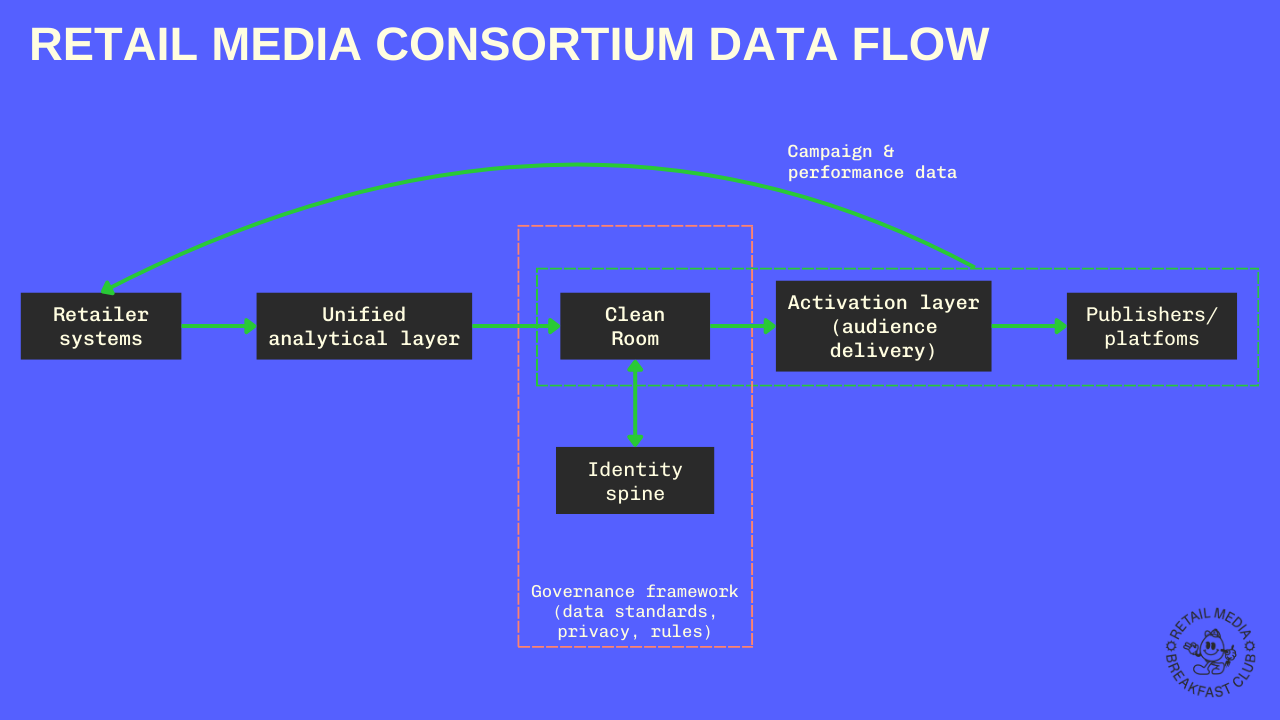
In June, SMG launched RMX by Plan-Apps, pitched as the UK's first retail media exchange — a single buying and measurement layer across multiple networks, starting with in-store digital screens and built with EPAM's Empathy Lab.
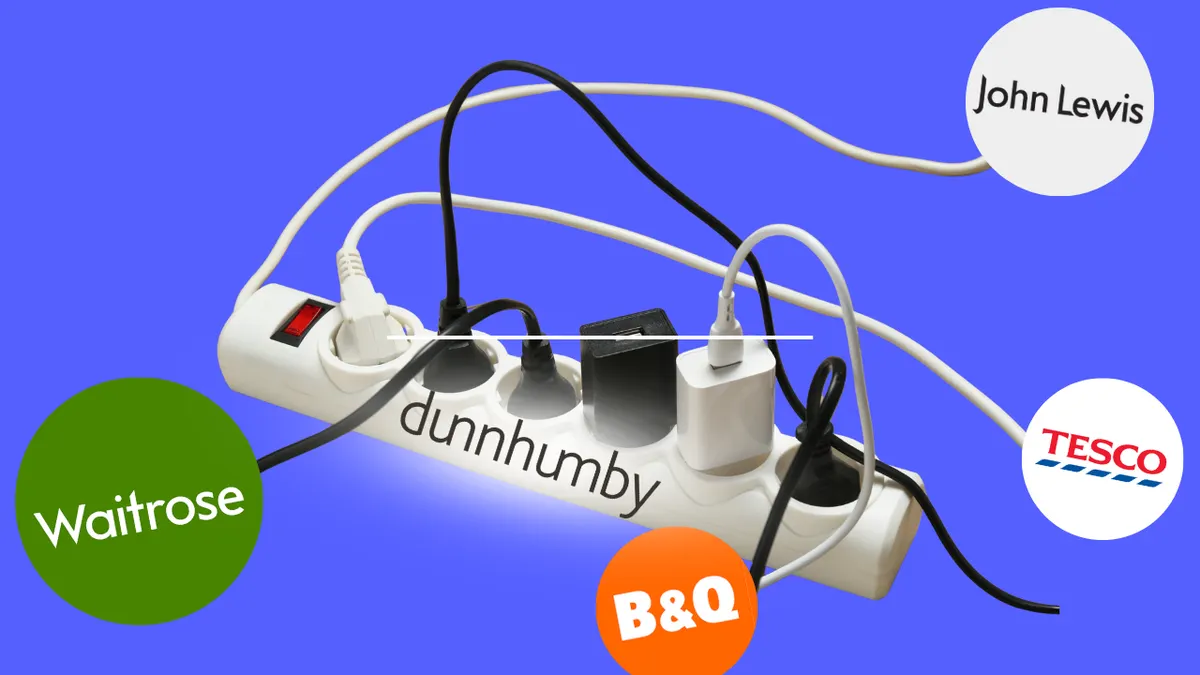
In the same month, dunnhumby announced its network alliance, with Tesco, B&Q, John Lewis and Waitrose signed up for pilots running over the summer, built on Kevel.
Viv Craske and Colin Lewis dug into both on their podcast, Retail Media Therapy, bringing on Dean Harris, who runs Co-op's media network, who spoke about why aggregation keeps coming back, and why it's still so hard.
Poor audience targeting is frustrating. But for retail media teams, it can be costly, too.
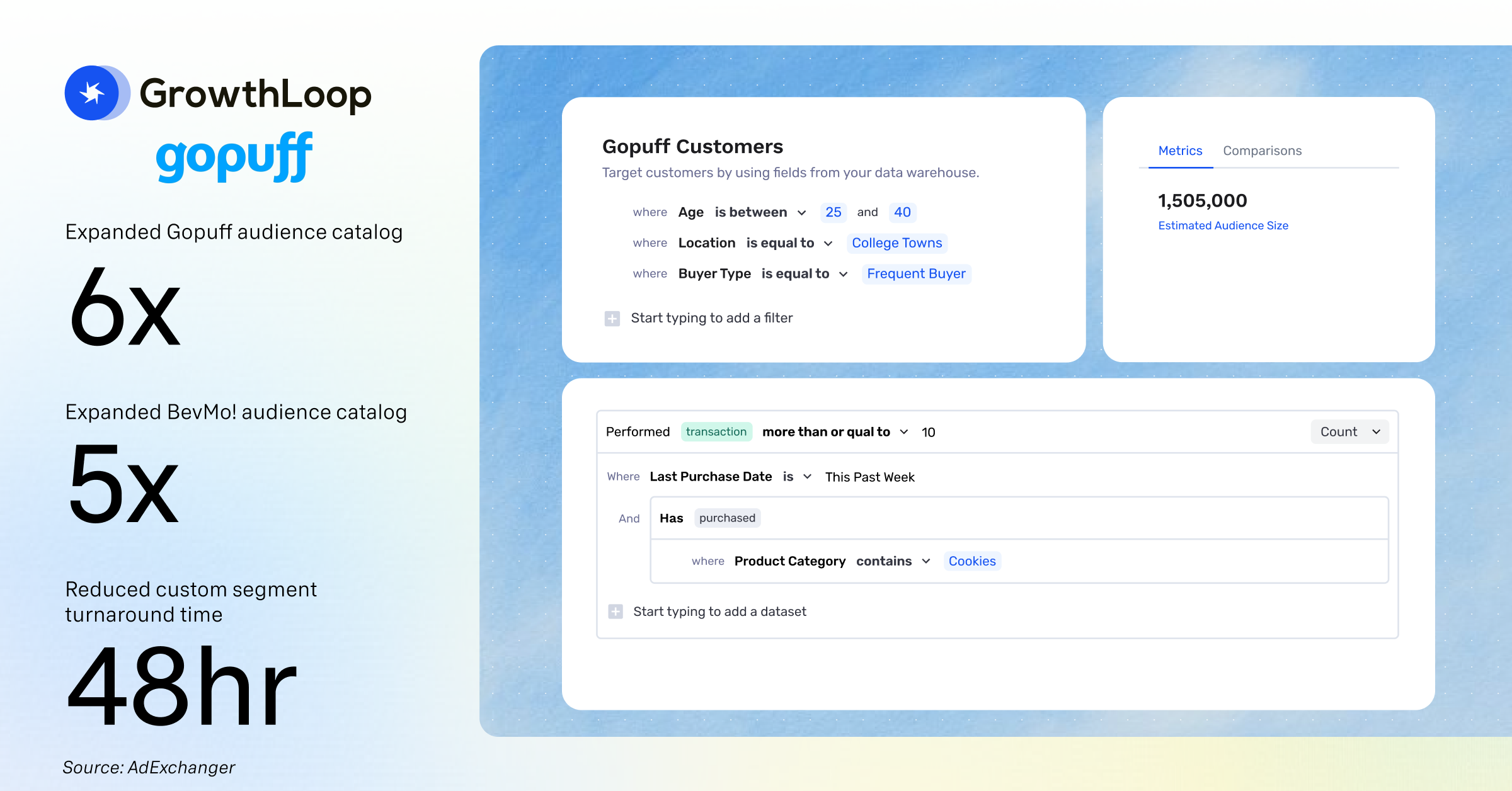
With GrowthLoop’s Composable Commerce Media solution, you can turn your first-party data into hundreds of high-value audience segments and launch campaigns faster.
After partnering with GrowthLoop, instant commerce pioneer Gopuff scaled from 100 syndicated audience segments to more than 600. And it now takes less than 48 hours to turn around a custom segment for one of their brand partners.
Learn more about how GrowthLoop is powering Gopuff’s best-in-class retail media operations.
The upside is more on the buy Side
Dean's read is that these platforms aren't launching because retailers discovered generosity. They're launching because advertisers have evolved.
"Their expectations are rising, their resources are falling, so they essentially want to do more with less," he said on the podcast. "And retailers have responded first to the 'do more' — so better media capabilities, better data capabilities, sophistication — and now more recently to the 'with less', which essentially means less friction, ease, speed, connectivity. But what RMNs can't solve for is the industry-wide fragmentation between each of their walled gardens, and I think that's gonna lead to advertisers and these platforms solving it for them, because ultimately consolidation is gonna hit the market."
Every individual network has been optimising its own experience for five years. And that might have been a necessary part of the "growing up" stage, but it doesn't yet solve for the fact that most retail media buyers aren't super interested in buying across twelve ad platforms.
Rocks, pebbles and sand
Dean laid out a framework for various 'end states' of RMNs:
- Rocks: "your scaled walled gardens, your default, your base in most plans — huge audiences, huge scale, online, offline, first-party data.
- Pebbles: "the specialist differentiated networks, the catalysts, the cherry on the cakes, the things that can offer above and beyond what those in the base plan, those rocks, can offer."
- Sand: "low-cost extensions to those audiences that are done through aggregates. So that long tail of retail media networks joined together where you can easily extend the reach of your campaigns."
- The retailer who becomes the aggregator: For example, dunnhumby which is owned by Tesco. Amazon's Retail Ad Service sells media infrastructure to retailers like Macy's.
- The 'squeezed middle: "those that are quite reluctant to aggregate but don't have the differentiation and don't have the scale."
This maps closely onto the IAB's six strategic paths for commerce media networks, where Path 6 is "compete through collaboration and coalitions." The IAB's caveat is Dean's caveat: aggregation only unlocks brand relevance "when governance, measurement, and incentives are explicitly aligned." (I wrote about that paper here)
The end game isn't a single dashboard
Colin's pushback was on what buyers actually want out of this. He argues that it's not necesarily a universal interface.
"The value is more in the latter, where if you want a beer buyer, you go to one place and you can get the UK grocery market's beer buyers," he said. "And if you want a confectionery buyer, or if you want a non-food or kiosk or anything like that, you've got a one-stop shop. Now, the interesting thing with the dunnhumby is it's a mix of sectors — except for the Waitrose and Tesco thing, which does have competing grocers in the same network that have similar audiences that can be purchased. So that's the really interesting element, that both those were up for being in the same place."
Same-sector audiences in the same auction is the thing that makes this useful for buyers — but is also the thing that should make retailers nervous.
The risk is on the supply side
And this is where co-host Viv Craske brought the receipts:
"I used to work for a grocery aggregator, and our CPMs were 15 to 25 pound CPM. And then programmatic came in, and you could get the same type of shopper audiences, with or without purchase intent, for like one pound. The risk here is that if you've got Waitrose and Tesco on the same platform, and let's say Waitrose audiences are more expensive for that beer buyer, then Waitrose loses out. So I love the idea of complementary retailers coming together, but what happens when the super networks have to start competing for agency spend or direct spend? Do we have a race to the bottom like we have with programmatic? Or by then, do we have some other technology upending us?"
Both platforms have pre-empted this. SMG's interim CEO Lee Lefeuvre wrote on LinkedIn that RMX "isn't simply about aggregating inventory or creating another ad network" but a "shared intelligence and activation layer" where "each retailer retains control of its pricing, inventory, data and client relationships." dunnhumby might say much the same. Everyone remembers what happened to publishers, and everyone is promising it won't happen here.
Now What
Dean's own answer, on where Co-op wants to land, was refreshingly candid: "I think we can land in that specialist role that makes a campaign work harder, makes it catalyze, but we've got to leave our ego at the door and know where we sit in the media plan."
That's the exercise. Not "are aggregators good or bad," but: am I a rock, a pebble, or sand? Most networks are desparately clinging to an internal expecation of 'Rock-like' growth. But perhaps it's time for a honest re-assessment.
Listen to the full episode of Retail Media Therapy with Viv Craske and Colin Lewis.
Read more from me: