
It's my last post of the year. Can you believe I only started Retail Media Breakfast Club in January this year? I can't.
Today, I got a notice from my podcast host that we have passed 50,000 podcast downloads.
And sometimes when I see who's subscribing to my newsletter or following along on LinkedIn, my stomach drops a little bit. Who knew retail media could be so interesting to so many people, and have the occasional dash of drama too?
Today I'm going to share some of my personal lessons from this year. But first, I'm going to share a quick story about one of my favorite bands, Vampire Weekend.
When Vampire Weekend first formed in the dorm rooms of Columbia University, Chris Tomson wasn't supposed to be the drummer. He was a guitarist in another band.
He picked up the drum sticks when Vampire Weekend booked their first gig because they couldn't find a drummer. He'd never drummed before. But he took what he knew from being a guitarist and got started. Vampire Weekend went on to have 3 number one albums in the US.
I feel like that's many of us in retail media.
We didn't go to university for this.
Most fell into it by necessity or curiosity - coming from inside a retailer, or from another era of ad-tech.
Retail media is a function that's only emerged recently, and has evolved rapidly just in the last few years. With AI it's going to change right up again.
Just like Chris Tomson… We're all just making it up as we go along.
SPONSOR: MIRAKL ADS
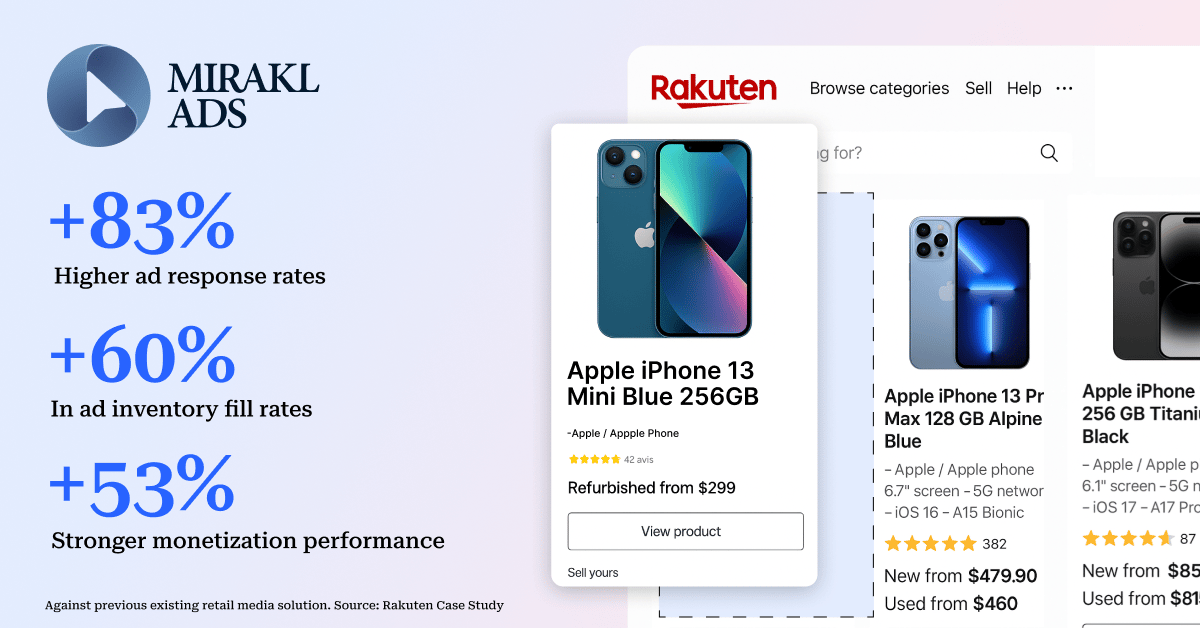
Did you know leading retailer media networks drive 85% of their ads revenue through mid- and long-tail advertisers?
Mirakl Ads provides full funnel ad formats tailored to both 1P and 3P advertisers, leveraging unique AI-capabilities that provide unprecedented levels of relevance and engagement.
Retailers who want to capture ad spend from the long tail of 3P marketplace sellers use Mirakl Ads in their tech stack.
Here are a few lessons I’ve learned in 2025.
1. We are all beginners
There are only a handful of people who have spent most of their career in retail media. Most of us come from somewhere else: from another part of ad-tech, coming up through retail and veering into this weird world of advertising. I have learned that we all come with a sliver of expertise and experience that colours our understanding of this industry, and that we may not understand all the other sides that well. For me, I had a huge blind spot around ad-tech, and I have really stretched my brain in big ways this year to understand it more.
For me, I had a huge blind spot around ad-tech. I'd spent years working with Amazon's fully custom ad platform, so when I started covering other retailers, I had to learn what an SSP was, how ad servers worked, why managed service looked different from self-service. I eventually drew diagrams mapping fund flows just to understand it myself—and felt a bit stupid doing it. But when I shared those diagrams, tons of people (even from ad-tech) admitted they didn't really understand it either. Turns out I wasn’t the only one who skipped the elementary stage of understanding how the pieces fit together.
I really think that we should all understand the POVs and incentives of our counterparts in the ecosystem: retailers, brands, ad-tech, agencies & consultants. If we walk a mile in their shoes, we can have a better relationship.
2. About that daily grind
Yes, making daily content IS as hard as it sounds. I take 2 long breaks every year to recover so I'm sprinting for 5 months at a time. By the end of my 5-month sprint I get sick to death of talking about this stuff. There, I said it.
For example right now, my body seems to knows it’s the last day and it’s rebelling. I have come down with some kind of flu, right before our long trip back to Perth for the holidays.
People follow me for my daily content. If that doesn't happen, I haven't fulfilled my promise and the whole thing falls down. I've had to protect my time, and I've had to say No to some things that sound fun but would pull me away from writing.
This year I have learned the upper limits of what I can say ‘yes’ to, identifying what my natural productivity rythums look like, and build both my day and year around making sure it’s sustainable.
3. Quantity IS quality.
Some articles take 8 hours between research, interviews, and thinking (and let's be honest, some mooching). Some take 2 hours because I've planned my time very poorly and that's all I have to work with. There's less of a correlation between time spent and popularity of a post than you'd think. Also the motion of creating 1 or more pieces of content every day inevitably forces some inquiry on a topic.
Sometimes I have a breakthrough idea, sometimes it's the smallest, incremental build on an existing idea—but the act of showing up daily creates momentum that careful planning never could.
4. The gold is in the conversation.
I am so pleased to get a lot of thoughtful comments on my content these days. And that means sometimes, plenty of people disagreeing, too. Although I'd like to put something fully formed and complete out every day, the reality is, even if I had all the time in the world, I will never think of everything, know every angle, understand everyone's POV. So I love that when I post in the morning, it often becomes just the start of a conversation.
I’ve found that drama is great for engagement but is taxing on the psyche. I've had some terrifically fun beefs this year ('Retail media is Mid' vs Jason Goldberg, and the celebrity death match at Cannes squaring up against Colin Lewis & Andrew Lipsman) and I've had some more serious disagreements. I do have to consider each time, is this worth it? Is this a hill I'm prepared to die on?
On the other hand, I'm not here to make bland content. There's enough of that out there. If everything was working great and everyone got along, there's no reason for me to be analyzing it.
Now what
I’ll be back in mid-January, kicking off another year of Retail Media Breakfast Club. I have some fun partnerships coming up, including a new series of LinkedIn Livestreams which were a really fun recent addition to my content lineups at the end of this year.
I wish you all a happy holidays and a happy new year.
And let's be kind to ourselves, and helpful to one another, while we reinvent our industry.
Thanks for reading, and see you in 2026!